
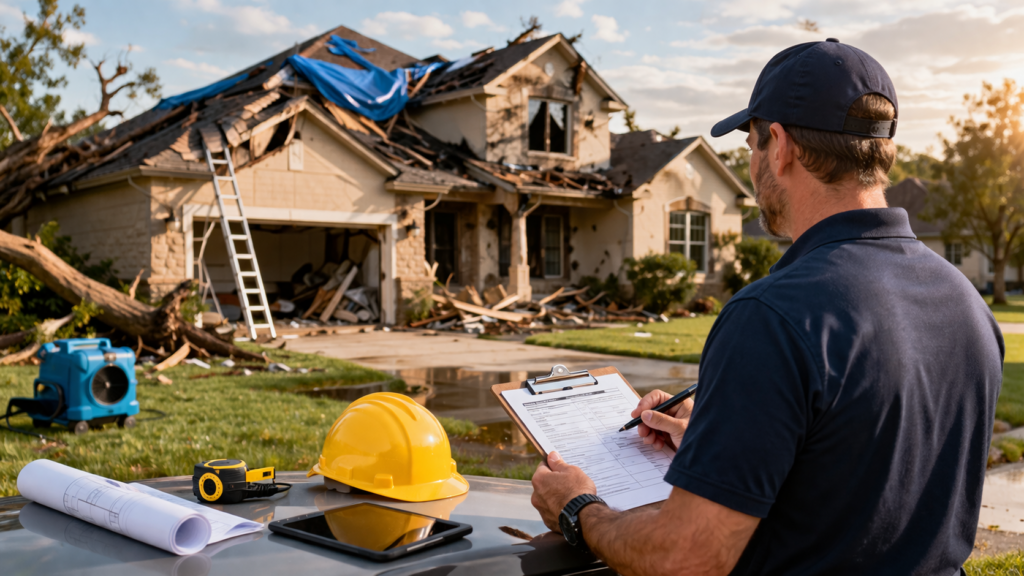
Storm hits. Pipe bursts. Fire spreads. In minutes, your property changes and suddenly you’re asking one critical question: when to hire a public adjuster. That decision can shape your entire claim outcome. Get it right, and you could recover fully. Get it wrong or wait too long and you may leave money on the table.
I’ve seen homeowners try to “handle it later.” That usually costs them. Timing matters more than most people realize. Let’s break this down clearly, practically, and without fluff.
What Is a Public Adjuster and How Do They Work?
A public adjuster is a licensed professional who represents you, not the insurance company. That’s the key difference.
There are three types of adjusters involved in claims:
- Insurance company adjuster → Works for the insurer
- Independent adjuster → Hired by the insurer on contract
- Public adjuster → Hired by you, the policyholder
Only one of these is fully aligned with your financial outcome.
What a Public Adjuster Actually Does
- Inspects and documents property damage
- Reviews your insurance policy in detail
- Prepares a comprehensive claim estimate
- Negotiates directly with the insurance company
- Pushes for a fair and complete settlement
They typically work on a contingency fee, meaning they only get paid if you get paid. Simple. Aligned incentives.
Why Timing Matters More Than You Think
Here’s the truth: the claims process starts shaping your payout from day one even before you realize it. Miss early documentation? You lose leverage. Accept a quick estimate? You lock in a lower baseline. Wait too long to bring in help? Your options shrink.
In many ways, insurance claims behave like complex systems small early inputs can drastically change outcomes later, much like concepts explored in nonlinear dynamics. The earlier you influence the process, the more control you retain. This is exactly why understanding when to hire a public adjuster is so important. It’s not just about if it’s about when. Early involvement = stronger claim.
Key Situations When You Should Hire a Public Adjuster
Let’s get practical. These are the moments when bringing in a public adjuster isn’t just helpful it’s smart.
After Major Property Damage
If your property has suffered serious damage, don’t go it alone.
Examples include:
- Fire damage
- Roof damage from storms or hail
- Water damage from flooding or pipe bursts
- Structural damage
Large losses require detailed documentation. And not just photos line-by-line estimates, material costs, labor calculations, and code upgrades. Public adjusters know what to look for. Most homeowners don’t. That gap matters.
When Your Insurance Claim Is Denied
A denial isn’t always final.
Insurance companies may deny claims due to:
- Lack of documentation
- Policy interpretation disputes
- Missed deadlines
A public adjuster can:
- Reassess the damage
- Identify overlooked evidence
- Reopen or challenge the claim
If you’ve been denied, that’s a strong signal for when to hire a public adjuster.
When You Receive a Low Settlement Offer
This happens more often than people expect.
The first offer:
- May exclude hidden damage
- May undervalue materials
- May use minimal repair assumptions
Here’s a quick comparison:
| Scenario | Insurance Offer | Adjusted Claim Value |
| Roof damage | $8,500 | $18,000+ |
| Water damage | $5,200 | $12,000+ |
| Fire damage | Partial coverage | Full rebuild scope |
Public adjusters often uncover missing items that significantly increase payouts.
When You Don’t Understand the Claims Process
Insurance policies are dense. Deadlines are strict. Requirements are specific.
If you’re unsure about:
- What your policy actually covers
- What documents you need
- How to respond to insurer requests
That confusion can cost you.
Hiring help early eliminates guesswork.
When You Don’t Have Time to Manage the Claim
Claims are time-consuming. Calls. Emails. Inspections. Paperwork.
If you’re:
- Running a business
- Managing a household
- Dealing with relocation
You likely don’t have hours to dedicate to claim management. That’s where a public adjuster steps in and takes over.
When It Might Be Too Late to Hire a Public Adjuster
Timing cuts both ways.
There are situations where options become limited:
- You already signed a final settlement
- The claim is fully closed with no dispute
- Deadlines (statute of limitations) have passed
That said, some claims can still be reopened under specific conditions. But it’s harder. This is why the safest strategy is simple: act early.
Signs You Should Call a Public Adjuster Immediately
Not sure where you stand? Watch for these red flags:
- The insurance company delays communication
- You’ve had multiple inspections with no clear answer
- You’re being pressured to accept a quick payout
- Estimates don’t match contractor quotes
- Damage feels underestimated
If even one of these is happening, it’s time to seriously consider when to hire a public adjuster and the answer is likely now.
Benefits of Hiring a Public Adjuster Early
Early action changes outcomes. Period.
Here’s what you gain:
- Stronger documentation from the start
- More accurate damage assessment
- Better negotiation leverage
- Less back-and-forth later
- Reduced stress
And yes often higher settlements.
How the Public Adjuster Process Works (Step-by-Step)
Let’s simplify the process so you know exactly what to expect.
- Initial Consultation
Review your policy and situation - Damage Inspection
Detailed property assessment - Documentation & Estimate
Full claim scope prepared - Claim Filing or Reopening
Proper submission with support - Negotiation
Direct communication with insurer - Settlement Agreement
Final payout secured
Clear. Structured. Professional.
Public Adjuster vs Handling the Claim Yourself
Not every situation requires professional help but many do.
DIY Might Work If:
- Damage is minor
- Claim is straightforward
- You have time and experience
Hiring a Public Adjuster Makes Sense If:
- Damage is significant
- Claim is complex
- You’ve received a low offer or denial
Think of it like this: small claims = manageable. Big claims = strategic.
How to Choose the Right Public Adjuster in Cleburne
Not all adjusters are equal. Choose carefully.
What to Look For:
- Licensed in Texas
- Proven experience with similar claims
- Clear fee structure
- Strong reviews or referrals
- Willingness to explain the process
Questions to Ask:
- What percentage do you charge?
- Have you handled claims like mine?
- How do you document damage?
- What results have you achieved?
Local expertise matters. A Cleburne Public Adjuster understands regional risks hail, storms, and property trends.
Common Misconceptions About Public Adjusters
Let’s clear this up.
“They’re too expensive.”
They’re paid from your settlement and often increase it significantly.
“Insurance companies don’t like them.”
That’s not your concern. Your goal is a fair payout.
“They slow down the process.”
In many cases, they speed it up by eliminating confusion.
Cost of Hiring a Public Adjuster
In Texas, fees typically range from:
- 5% to 15% of the claim payout
It depends on:
- Claim size
- Complexity
- Timing
But here’s the key: a higher settlement often offsets the fee.
Real-Life Scenarios: When Hiring Made the Difference
Let’s make this real.
Scenario 1: Fire Damage
Initial offer: partial repairs
Final result: full restoration coverage after adjuster involvement
Scenario 2: Water Damage
Claim denied due to “maintenance issue”
Outcome: reopened and approved
Scenario 3: Storm Damage
Low initial roof estimate
Final payout doubled after reinspection
These aren’t rare cases. They’re common.
Pro Tips to Maximize Your Insurance Claim
Want better results? Start here.
- Document everything immediately (photos, videos)
- Keep receipts and repair estimates
- Avoid accepting the first offer blindly
- Track all communication with your insurer
- Consult before signing anything
One smart move early can change the entire outcome.
Final Thoughts: Is It the Right Time to Hire a Public Adjuster?
Here’s the bottom line.
If your claim is:
- Large
- Confusing
- Delayed
- Underpaid
- Denied
Then you already have your answer to when to hire a public adjuster. Don’t wait for problems to escalate. Act early. Protect your claim. Maximize your payout. Because once the process moves forward, your leverage doesn’t increase it disappears. And in a high-stakes situation like this, timing isn’t just important. It’s everything.
FAQs
You should hire a public adjuster as soon as you experience significant property damage or before accepting any insurance settlement offer.
Yes, you can hire one after filing, but bringing them in early often leads to stronger documentation and better outcomes.
For minor damage, it may not be necessary, but for larger or complex claims, a public adjuster can significantly improve your payout.
Most public adjusters charge a contingency fee, typically between 5% and 15% of the final settlement amount.
Yes, in many cases they can review the claim, gather additional evidence, and help challenge or reopen a denial.
No, in many situations they streamline the process by handling communication and reducing back-and-forth with the insurer.
They often do by identifying overlooked damages and negotiating more comprehensive settlements.
An insurance adjuster works for the insurer, while a public adjuster represents your interests as the policyholder.
Yes, deadlines vary by policy and state laws, so it’s best to hire one before your claim is finalized or closed.
Look for proper licensing, local experience, transparent fees, and strong client reviews before making a decision.